
CASE STUDY:
Protecting the Grid: Evaluating Extreme Weather Vulnerabilities in Aging Telecommunications Assets
SECTOR:
PROJECT DURATION:
LOCATION:
INFRASTRUCTURE
4 MONTHS
NEW SOUTH WALES, AUSTRALIA
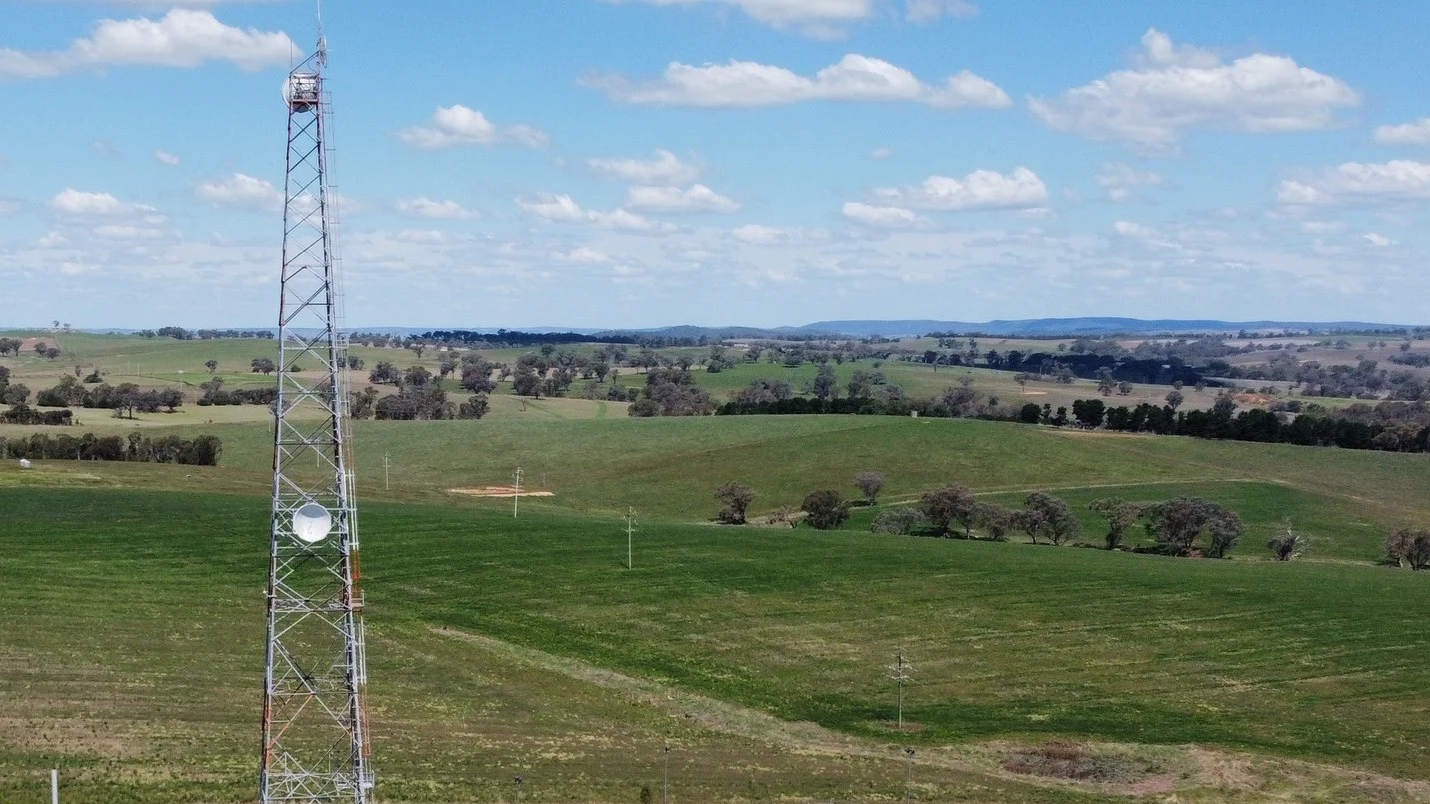
Pacific Systems was engaged by a critical infrastructure operator in New South Wales, Australia, to deliver a comprehensive operational readiness review. Within this broader engagement, our team identified a severe, unmitigated structural and governance hazard involving an un-engineered 68.6-metre communications tower situated centrally on the site. Addressing this specific, high-risk asset became an immediate priority, transforming an ambiguous third-party liability into a structured compliance and safeguarding roadmap designed to protect adjacent critical facilities and reinforce overall regional energy security.
Understanding the Environment
The asset operates within a highly complex utility and critical infrastructure environment. Located at a vital energy facility, the site is subject to strict safety regulations, commercial leasing requirements, and aviation safety guidelines. Governance of the infrastructure is heavily obscured by unclear ownership boundaries. The lattice communications tower does not directly support site operations; instead, it is occupied by an external telecommunications entity servicing a third-party commercial client, with no verified lease agreements or financial compensation frameworks in place with the site owner. This division creates significant organisational and legal silos between external corporate stakeholders, land-use planners, and frontline operations, all while the asset sits adjacent to high-consequence facilities like control buildings and active compressor stations.
The Challenge
The operational readiness review revealed that the tower lacked any verifiable engineering documentation or maintenance history, effectively classifying it as an un-engineered structure. Physically, its faded markings and absent top-mounted illumination breached aviation safety standards. Furthermore, the tower's 68.6-metre height created a critical collapse radius directly threatening the adjacent station and control facilities. Left unresolved, the aging tower faced a severe risk of structural failure during extreme weather events, which could trigger a catastrophic domino effect, destroy vital infrastructure, disrupt regional operations, and cause severe regulatory and legal liabilities.
Our Approach
Pacific Systems deployed a rigorous methodology rooted in forensic asset research, systems thinking, and structural risk modelling.
Our team executed the investigation across four distinct stages:
Evidence Gathering and Asset Research: Consultants conducted detailed physical and archival inspections, establishing that the structure entirely lacked engineering details, installation records, or structural integrity documentation.
Risk and Climate Resilience Analysis: Using recent historical benchmarks of similar lattice tower failures under severe wind loads, our team evaluated the asset’s vulnerability to escalating extreme weather conditions in New South Wales. We mapped out the exact 68.6-metre collapse radius relative to high-consequence site infrastructure.
Regulatory and Policy Assessment: We evaluated the tower's visual condition against standard aviation safety guidelines, confirming that its faded paint and lack of illumination constituted a direct compliance failure.
Stakeholder Facilitation and Strategy Design: Pacific Systems facilitated alignment sessions between internal corporate risk officers and legal teams. We designed a dual-pathway remediation framework that defined a clear commercial negotiation strategy to resolve third-party ownership ambiguity while establishing strict clearance guidelines to physically safeguard nearby facilities.
Outcomes and Impact
By isolating and analysing this critical vulnerability, Pacific Systems delivered substantial long-term benefits to the organisation's resilience and corporate governance. The primary structural hazard was mitigated by establishing formal clearance guidelines around critical assets and initiating an imperative structural integrity review. This intervention drove stronger governance by forcing the resolution of ambiguous commercial leasing and liability frameworks with external parties. Executive visibility was greatly enhanced, giving leadership data-backed clarity regarding un-engineered risks on their land. Ultimately, the engagement reduced risk exposure and improved organisational performance by shielding core energy infrastructure from external, unmonitored operational dependencies and severe weather threats.
FOCUS: ASSET LIFECYCLE ANALYSIS, OPERATIONAL RISK ASSESSMENT AND STRUCUTRAL MODELLING, CROSS FUNCTIONAL STAKEHOLDER FACILITATION AND COMMERCIAL ALIGNMENT, CLIMATE RESILIENCE AND EXTREME WEATHER VULNERABILITY ANALYSIS, INFRASTRUCTURE GOVERNANCE AND THIRD PARTY LIABILITY MANAGEMENT, REGULATORY COMPLIANCE MAPPING AND AVIATION SAFETY REVIEW