
CASE STUDY:
Complex Contract Management & Blast Risk Mitigation
ISBL and OSBL Infrastructure Integration
POWER GENERATION & HEAVY INDUSTRIAL
SECTOR:
QUEENSLAND, AUSTRALIA
LOCATION:
Understanding the Environment
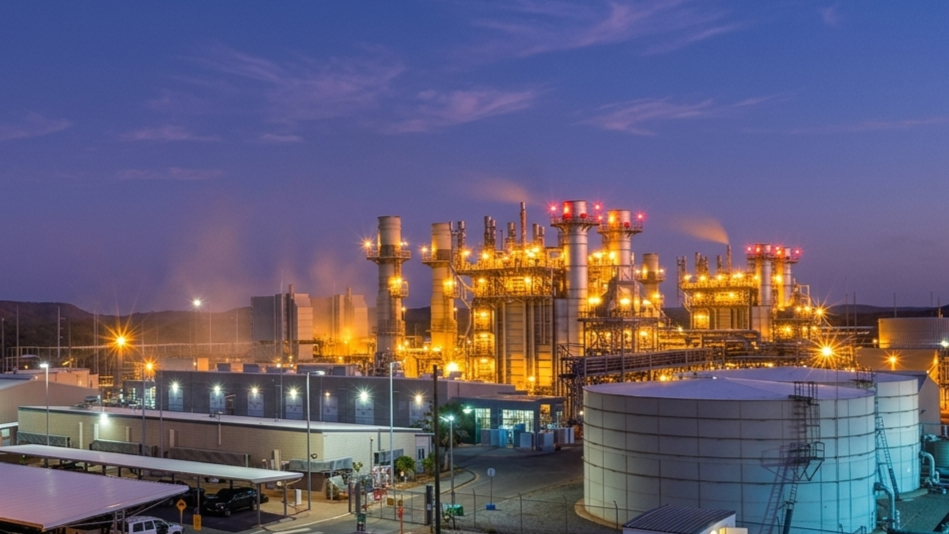
Pacific Systems was engaged by a critical infrastructure operator in regional Queensland to conduct a comprehensive asset integration review. The operational environment comprises a complex energy generation network that serves as a vital regional infrastructure hub. Governance of the site involves intricate multi-party commercial arrangements, intersecting statutory boundaries, and strict safety guidelines regulated by state authorities. Operationally, the primary facility supports over 50 internal personnel and up to 200 contractors during peak maintenance and shutdown events, creating high-density coordination challenges within a high-voltage, hazardous production zone. Compounding these constraints are intense physical interdependencies, including proximity to third-party utility assets, high-pressure gas transmission infrastructure, and precisely defined hazardous area classifications that dictate strict spatial buffer zones. While evaluating operational readiness across a distributed utility network, the team performed a detailed situational awareness analysis that uncovered an unmapped, critical safety exposure. Addressing this hidden site risk contributed to a broader strategic objective, ensuring strict regulatory compliance, robust safety standards, and operational resilience across the region's energy generation footprint.
The Challenge
During a situational awareness analysis, Pacific Systems discovered that temporary project offices had progressively migrated within a dangerous overpressure blast zone. This placement exposed transient personnel to severe safety risks from nearby high-pressure processing lines. If left unresolved, this hidden liability threatened to result in catastrophic injury or fatality during a containment failure. Furthermore, the positioning of these high-occupancy structures compromised emergency access corridors and blocked vital isolation points, creating the potential for severe regulatory non-compliance and catastrophic operational shutdown.
Our Approach
Pacific Systems executed a methodical risk investigation utilising systems thinking and technical root-cause analysis. The team established a baseline by separating the site layout into Inside Battery Limits, covering the primary production equipment, and Outside Battery Limits, which comprised the supporting infrastructure. The consultants conducted desktop spatial modelling to map the exact contours of the overpressure blast zone relative to existing structures.
To resolve the hazard without disrupting vital maintenance operations, the team designed a strategic, non-disruptive remediation framework that decoupled contractor workspaces from the blast zone. The consultants engaged directly with facility operators and engineering teams through technical design workshops to assess site capacity. Pacific Systems then proposed a phased deployment strategy that safely relocated essential personnel away from the hazard area. This involved replacing the existing non-compliant portable offices with specialised, blast-resistant buildings located outside the overpressure perimeter. This design intervention maximised spatial efficiency and accommodated up to 60 contractors simultaneously without reducing workforce density or interrupting active generation streams.
Outcomes and Impact
The implementation of the remediation framework completely eliminated the safety hazard, successfully removing high-occupancy workspaces from the overpressure blast zone. By establishing blast-resistant building policies and clear boundaries between inside and outside battery limits, the client achieved full compliance with industrial safety standards. The intervention significantly enhanced situational awareness and reduced long-term risk exposure across the regional portfolio. Operational readiness was preserved, allowing critical maintenance schedules to proceed with zero workforce downtime. Finally, the project delivered improved decision-making capabilities and better executive visibility, providing operational leaders with a robust model for managing spatial risks during high-density contractor shutdowns.
FOCUS: CRITICAL INFRASTRUCTURE RISK MITIGATION, INDUSTRIAL SPATIAL ANALYSIS AND MODELLING, HAZARDOUS ZONE SAFETY COMPLIANCE, INSIDE / OUTSIDE BATTERY LIMITS (ISBL AND OSBL), PHASED REMEDIATION FRAMEWORK, TECHNICAL STAKEHOLDER CONSULTATION, EMERGENCY ACCESS AND CORRIDOR OPTIMISATION